How to turn complex info into an engaging video
Have you ever tried explaining something super complex to someone who knows absolutely nothing about it? It took about three years for my mum to understand what my job actually is, so I know the struggle.
Maybe you're trying to explain a fintech product, a piece of academic research, or a service that makes perfect sense to the people working on it, but absolutely zero sense to anyone else.
That's where a good explainer video can come in.
Animation can be a brilliant way to turn complicated ideas into something clear, engaging and actually quite interesting. But there's a bit more to it than making a few things move around and hoping for the best.
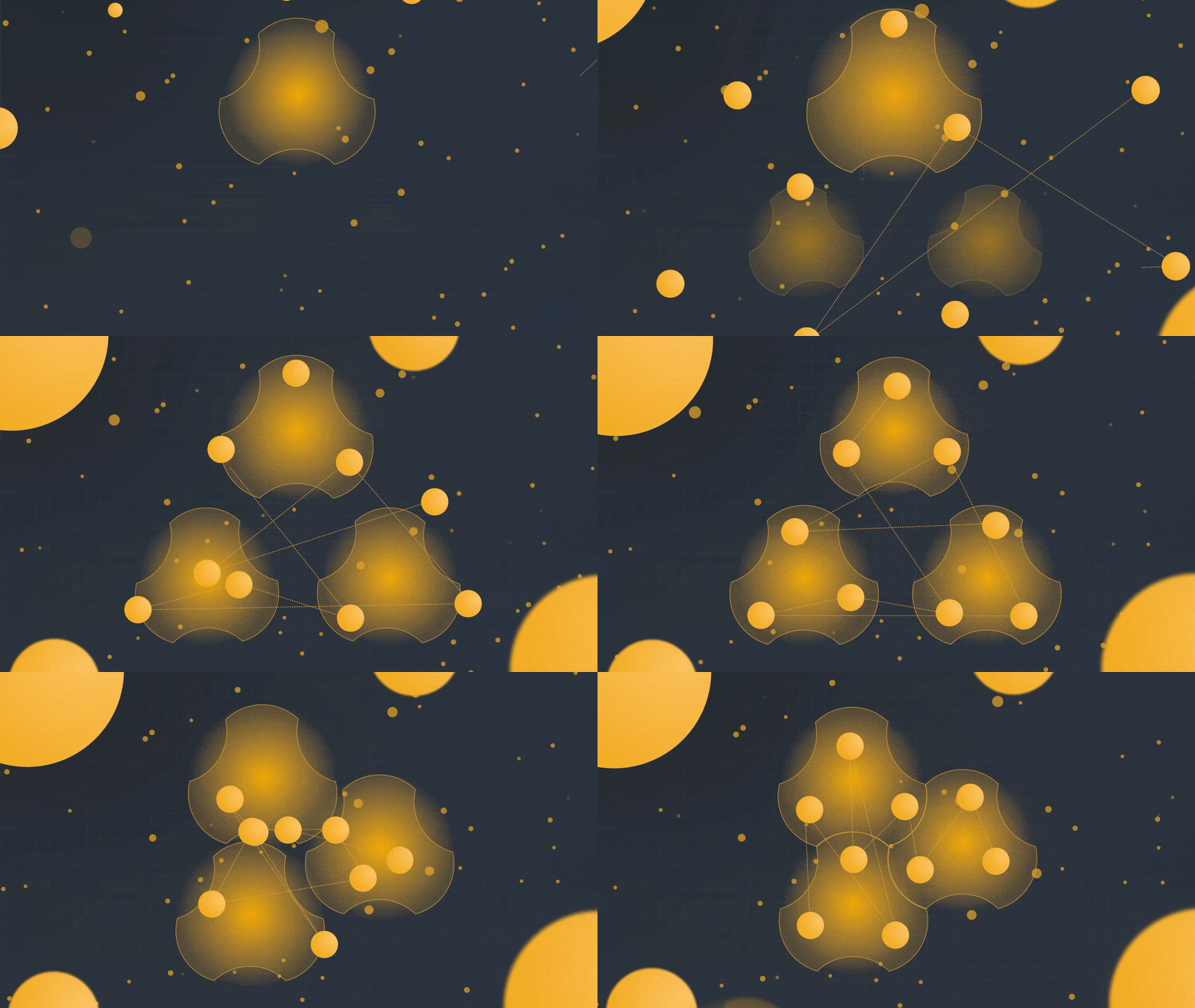
Making complex info more engaging with an explainer video for Global Citizens' Assembly
1. Work out what you're actually trying to say
One of the first questions I ask clients is: “What do you actually need people to understand?"
Not literally everything you could tell them. Just the important stuff.
When you're really close to a subject, everything feels essential. Every feature, every detail, every caveat. But before you know it, your 60-second video is trying to communicate approximately 47 different things.
The trick isn't necessarily making the information simpler. It's working out what matters most to your audience.
2. Find the story hiding in the information
Even the most technical subject usually has a story in there somewhere.
Rather than listing every feature of a software platform, why not start with the frustrating problem it solves? Why was it created in the first place?
Or instead of presenting endless research findings, data and stats, show how those findings affect real people.
Suddenly, the information has context. And people actually give a damn.
Good storytelling isn't about dumbing things down. It's about making the important stuff land.
3. Let the visuals do some of the talking
This is where animation really comes into its own.
You can show invisible processes, simplify complicated systems, bring stats to life, or explain something that would be pretty difficult to film.
But! More movement doesn't automatically = better communication.
Sometimes a simple diagram appearing at exactly the right moment is far more effective than an elaborate 3D whizz around.
The goal isn't to make everything move. It's to make everything make sense.
4. Do the thinking before the animating
It's tempting to jump straight into making things look good. And I get it, I like pretty things too. But the most important decisions usually happen before anything even starts moving.
Getting the message, script and storyboard right early on means fewer surprises later. And it's much easier to change a sentence than rebuild a fully animated scene.
That's why my process starts with understanding the problem, finding the story and working out the right visual approach before getting stuck into animation.
Got something complicated to explain?
You don't need to arrive with a perfectly written script or a fully formed creative brief.
I'm a freelance Design Director and Motion Designer, and a big part of my job is helping businesses and organisations work out what they're actually trying to say, then finding a creative way to say it.
So if you've got a complicated idea, product or piece of research that needs explaining, get in touch.